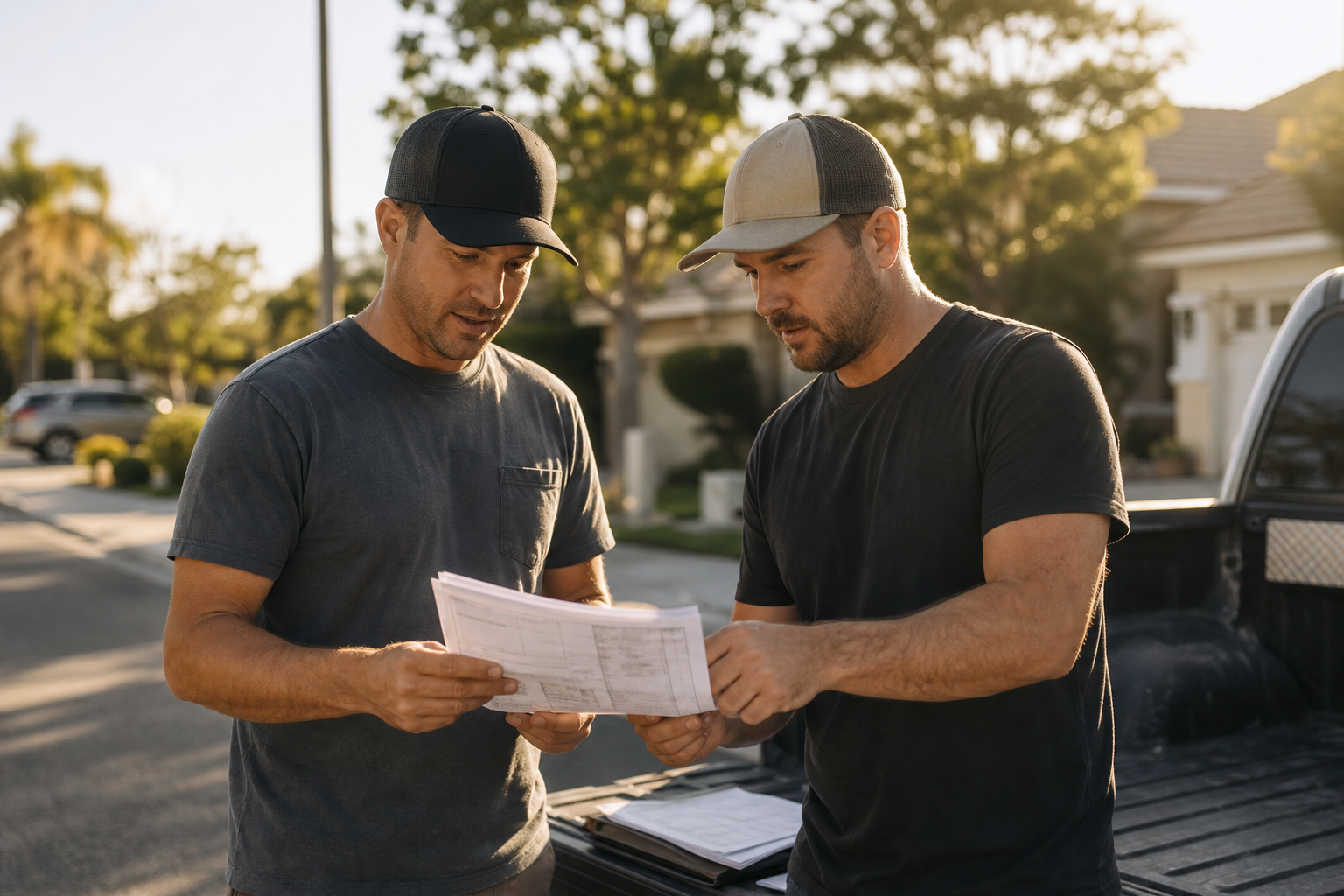
Who You Run Deals With Shapes Your Ceiling
The 5-Person Rule Is Real — And Most Operators Are Surrounded Wrong

Think about the last 5 people you talked shop with. Not socially — specifically about deals, money, and how you're running your business. Write them down.
Now ask: how many of them closed a deal in the last 90 days? How many have a buyer they can actually move a deal to this week? How many push back on your numbers instead of just nodding?
Pace Morby has been saying a version of this for years on the Pace Morby Show — the people you spend the most time with set the standard your habits drift toward. Not aspirationally. Literally. Their tolerance for excuses becomes your tolerance. Their risk appetite becomes yours. Their deal volume sets the invisible bar you measure yourself against.
For real estate operators, this isn't a mindset speech. It's a deal-flow problem.
Why a Thin Network Kills Deals Before They Start

A wholesaler in a mid-sized Midwest market was running solid acquisitions — off-market SFR, a few small multifamily leads, one MHP deal he'd been chasing for months. His numbers on paper looked fine. His close rate was not fine.
The issue wasn't his marketing. It wasn't his comps. He had a buyers list of about 40 people he'd collected over two years, and roughly 8 of them would actually respond to a new deal. Of those 8, maybe 3 had real buying capacity on a given week. That's not a buyers list. That's a group text.
When your network is thin, every deal becomes a scramble. You're re-pitching cold buyers. You're cutting your assignment fee to manufacture urgency. You're sitting on a deal under contract while your 45-day close window bleeds down.
The operators I've seen move past this don't do it by building a bigger spreadsheet. They get into rooms — real or virtual — where active buyers, other wholesalers, and creative finance operators are already moving deals. The network itself becomes the pipeline.
Per the 2024 Federal Reserve Small Business Credit Survey, access to relationships and referral networks consistently ranks among the top factors small business operators cite for growth — not capital alone, not marketing spend.
The Specific Habits That Separate Builders From People Who Stay Stuck
There's a pattern I keep seeing across asset classes. The operators who consistently close — whether it's SFR assignments, SubTo deals, seller carry on commercial, or land — share a few habits that have nothing to do with tactics.
They debrief deals that didn't close. Not to beat themselves up — to find the actual breakdown. Was it buyer capacity? Wrong exit strategy on the underwrite? An MAO that was too aggressive or too conservative? They treat every dead deal as a data point.
They keep their buy box conversations current. A buyer who wanted SFR in a specific zip code six months ago may have pivoted to small multifamily. Operators who check in regularly know this. Operators with stale lists don't find out until a deal falls through.
They share deals they can't close. This one's counterintuitive to a lot of newer operators, but the builders I know treat a deal they can't move as a JV opportunity, not a failure. Get the right buyer, split the fee, build the relationship. That's how a network actually compounds.
And they spend time around people who do all of the above. Not just people who talk about it at meetups.
The Contrarian Take on Real Estate Masterminds and 'Community'

Here's the uncomfortable part: most real estate communities are built to sell you something, not to sharpen you.
High-ticket masterminds, guru Discords, Facebook groups with 40,000 members and 11 active ones — these aren't networks. They're audiences. And being an audience member will not improve your deal flow.
The operators who actually get sharper from their peer group are in smaller, higher-accountability environments. A group of 6 wholesalers sharing dispositions intel. A SubTo study group where everyone's working live deals. A JV network where deals actually change hands. According to NAR research, referral and peer networks remain one of the dominant deal-sourcing channels for active investors — not paid lead gen, not cold lists.
The standard advice says: go to every meetup, join every community, network constantly. The reality for operators who are actually closing is more selective. They'd rather have 10 buyers who move fast than 400 who ghost. They'd rather have 3 JV partners who know their buy box than a mastermind that charges $25,000 to hand them a Facebook group login.
Build fewer, deeper relationships with people who are actively in the market. That's the filter.
How DealDog Builds the Network Layer Most Operators Are Missing
The problem with building your own buyers list from scratch is that it takes years, it goes stale constantly, and it only covers the buyers you personally know. That's a structural ceiling, not a hustle problem.
This is part of what we built DealDog to address. When you run a deal through the platform, it doesn't just match against your own buyers — it scans across the entire DealDog network for qualified buyer matches by buy box, asset class, geography, and exit strategy. A BRRRR candidate in a secondary market might not fit anyone on your personal list, but it might fit 4 buyers in the broader network you'd never have found otherwise. JV referral fees are built into the workflow so the economics of that match are already handled.
For operators running SubTo, seller carry, novations, or commercial — the asset classes that most buyers lists completely underserve — cross-network matching changes the math on deal flow. You're not stuck moving only what your 40-person list can absorb.
If you want to see how the matching actually works across asset classes, the demo is at dealdogcrm.com. Watch it at your own pace before deciding whether it fits your stack.
Before Your Next Deal Closes: What to Actually Change

This isn't philosophical. Here's what to do in the next week if your network is holding your deal flow back.
- Audit your active buyers list. Go through it and mark anyone who hasn't responded to a deal in 90 days as cold. Don't delete them — just stop prioritizing them. Figure out what your real, responsive list actually looks like right now.
- Identify the 3 operators in your market or niche who are closing at a pace you respect. Reach out with something specific — a deal question, a comp you're unsure on, a buyer you're trying to place. Not a networking pitch. A real question that starts a real conversation.
- Run your next deal through a cross-network matching tool — whether that's DealDog or something else — before you default to your existing list. See what buyer profile actually fits the asset type and exit strategy, not just who you already know.
- Find one JV opportunity in the next 30 days. A deal you can't close, a buyer someone else has, a seller a partner is working. Get comfortable with splitting a fee in exchange for speed and volume. That's how thin networks get thicker.
Your environment compounds. The operators who built the most consistent pipelines I've seen didn't do it by finding better marketing channels. They did it by getting selective about who they run deals with — and then building systems that let those relationships move deals faster.
If you want to see how DealDog handles the network and underwriting side of this, the walkthrough is here. No signup required to watch.
Frequently Asked Questions
How do I build a real estate investor network that actually generates deal flow?
Start with depth, not breadth. A small group of active buyers, wholesalers, and JV partners who are closing deals right now will move more volume than a large, passive list. Reach out with specific deal questions, share deals you can't close as JV opportunities, and stay current on what your buyers' actual buy boxes look like — not what they said six months ago.
Cross-network platforms like DealDog can accelerate this by connecting your deals to buyers outside your personal network across 15 asset classes, with JV referral fees already built in.
Why does my buyers list stop working after a few months?
Buyer criteria shift constantly. A buyer who wanted SFR flips in one zip code may have pivoted to multifamily or land, moved markets, or simply run out of capital. A list that isn't actively maintained goes stale fast — and you usually don't find out until a deal falls through.
The fix is regular buy box check-ins, not just blasting every new deal to the same list. Segment by asset class, exit strategy, and geography, and flag anyone who hasn't engaged in 90 days as cold.
What is cross-network buyer matching in real estate wholesaling?
Cross-network matching means your deal gets scanned against buyers outside your personal list — across a broader platform or network — to find qualified matches by buy box, location, asset type, and exit strategy. This matters most for deals in niche asset classes (mobile home parks, land, commercial, SubTo) where your own list may have no active buyers.
DealDog's cross-network matching does this automatically when a deal is submitted, and surfaces JV opportunities with referral fees built into the workflow.
How do masterminds and peer groups actually affect real estate deal flow?
The ones that move deals are small, high-accountability, and full of people who are actively closing — not just talking about closing. Large communities and high-ticket mastermind groups often function more as audiences than active networks, which won't sharpen your buy box intelligence or move your inventory faster.
Prioritize environments where deals actually change hands and where members push back on your numbers. That's the signal a group is worth your time.
What is a JV deal in real estate wholesaling and how does it help thin buyer lists?
A JV (joint venture) deal in wholesaling is when two operators split the assignment fee on a deal — one brings the contract, the other brings the buyer. It's the fastest way to close deals your own list can't absorb.
Operators with thin buyer lists who are willing to JV consistently move more volume than those who only try to close through their own pipeline. The fee split is smaller, but the deal closes — and the buyer relationship is one you can build on for the next deal.
